| QUICK ANSWER
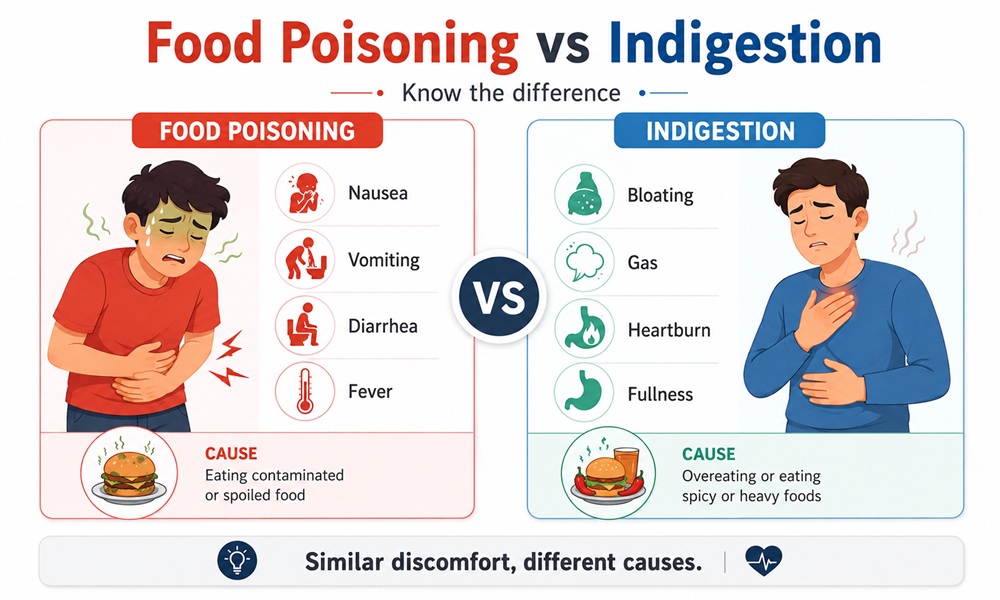
Indigestion is discomfort from how you ate — too much, too fast, too rich — causing bloating, burning, and fullness that eases within a few hours. Food poisoning is an infection from contaminated food, causing more severe vomiting, diarrhoea, cramps, and sometimes fever, usually lasting one to three days. The biggest clues are severity and the presence of vomiting or diarrhoea. |
Both start with an upset stomach after eating, but they behave very differently over time. Reading the clock is the quickest way to tell them apart.
By the clock: how each one unfolds
Indigestion (dyspepsia)
- During or right after a meal: fullness, bloating, upper-tummy burning, belching, mild nausea.
- A few hours later: symptoms fade, especially after an antacid or rest.
- Key trait: tied to what and how you ate; rarely severe; usually no vomiting or diarrhoea.
Food poisoning
- 30 minutes to 6 hours (toxin-type): sudden, forceful vomiting and cramps.
- 6 to 72 hours (most bacteria/viruses): nausea, vomiting, watery diarrhoea, cramps, sometimes fever.
- Key trait: more intense and longer; others who ate the same food may fall ill too.
Onset time by common cause (a clue most guides skip)
Roughly how long after eating symptoms appear can hint at the culprit:
| Typical onset | Common culprit | Hallmark |
| 30 min – 6 hrs | Staph aureus, Bacillus cereus (toxins) | Sudden vomiting, fast onset |
| 6 – 24 hrs | Clostridium perfringens | Cramps and diarrhoea |
| 12 – 48 hrs | Norovirus, Salmonella | Vomiting + diarrhoea, sometimes fever |
| 1 – 3 days+ | Campylobacter, E. coli | Diarrhoea (may be bloody), cramps |
Side-by-side summary
| Feature | Indigestion | Food poisoning |
| Cause | Overeating, rich/spicy food, fast eating | Contaminated food (bacteria/virus/toxin) |
| Severity | Mild | Moderate to severe |
| Vomiting/diarrhoea | Uncommon | Common, often repeated |
| Fever | No | Sometimes |
| Duration | Hours | 1–3 days (sometimes longer) |
| Others affected? | No | Possibly, if they shared the food |
What to do
- Both: rest and sip fluids steadily.
- Food poisoning: focus on rehydration with water and ORS/electrolytes to replace what vomiting and diarrhoea remove.
- Indigestion: eat lighter, avoid trigger foods, and consider an antacid.
- Reintroduce bland foods (rice, banana, toast) as you feel better.
How to prevent each
Preventing food poisoning
- Wash hands and surfaces before and after handling food.
- Cook meat, eggs, and seafood thoroughly, and keep them separate from ready-to-eat items.
- Refrigerate leftovers promptly and avoid food left out in warm conditions.
- Use safe water and rinse fruits and vegetables well.
Preventing indigestion
- Eat smaller, slower meals and avoid lying down straight after eating.
- Cut back on very rich, fatty, spicy, or acidic foods if they trigger you.
- Limit alcohol, caffeine, and smoking, and manage stress.
Recovering well
With either problem, the priority is fluids. Sip water and oral rehydration solution steadily rather than gulping large amounts. Ease back onto plain, gentle foods such as rice, toast, banana, and clear soup, and add richer foods only as your appetite returns. Rest gives the gut time to settle. If you cannot keep fluids down, or symptoms drag on beyond a few days, get checked.
Some people need extra caution: young children, older adults, pregnant women, and anyone with a weakened immune system can become dehydrated or seriously ill faster, so they should seek advice early rather than waiting it out.
| RED FLAGS — SEE A DOCTOR
Get medical help for: high fever, blood in vomit or stool, severe or constant tummy pain, signs of dehydration (very dark urine, dizziness, dry mouth, little or no urine), symptoms lasting beyond 3 days, or illness in the very young, elderly, pregnant, or those with weak immunity. |
FAQ
How quickly does food poisoning start?
It varies by cause — from about 30 minutes for some toxins to a few days for certain bacteria. Sudden, forceful vomiting within hours of eating is a classic early pattern.
Can indigestion cause diarrhoea?
Indigestion mainly causes upper-tummy discomfort, bloating, and burning. Diarrhoea and repeated vomiting point more toward food poisoning or a stomach bug.
Should I take anti-diarrhoea medicine for food poisoning?
For mild cases in adults, rest and rehydration are usually enough, and the body clears the infection on its own. Anti-diarrhoea medicines are not always advised — especially with fever or blood in the stool — because they can keep the germ in the body longer. When in doubt, ask a pharmacist or doctor.
What foods should I avoid while recovering?
Skip greasy, spicy, very sugary, and dairy-heavy foods until your stomach settles, along with alcohol and caffeine. Start with bland, easy-to-digest options and build up slowly.
Is food poisoning contagious?
The contaminated food itself is not passed person to person, but some causes (like norovirus) spread easily through contact and surfaces, so wash hands well.