In a heatwave the two go hand in hand and the symptoms overlap, but recognising which one you are seeing changes what you do next — and can prevent a slide into heat stroke.
Spot it: the fast comparison
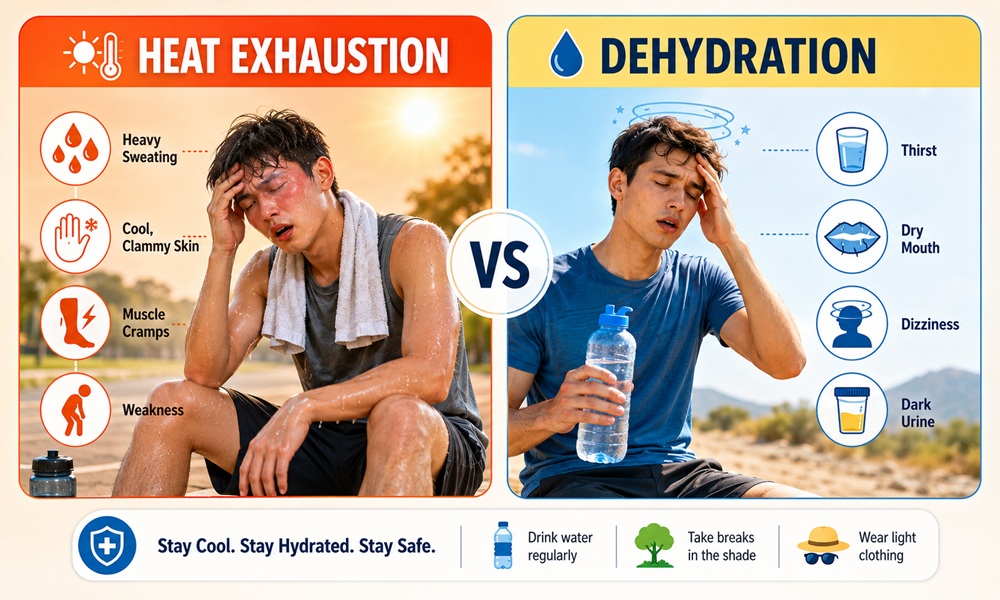
| Sign | Dehydration | Heat exhaustion |
| Trigger | Not enough fluid in | Body overheating in the heat |
| Thirst | Strong | Present |
| Sweating | Reduced as it worsens | Heavy |
| Skin | Dry | Cool, clammy, pale, damp |
| Urine | Dark, scanty | Dark if also dehydrated |
| Extra signs | Dizziness, fatigue, headache | Nausea, cramps, faintness, fast pulse |
| Body temp | Usually normal | Normal or mildly raised |
The severity ladder: dehydration → heat exhaustion → heat stroke
Think of these as steps that can follow one another in hot conditions:
- Dehydration: fluid loss; correct it early with water and electrolytes.
- Heat exhaustion: overheating with heavy sweating, weakness, nausea; needs cooling and rest now.
- Heat stroke (EMERGENCY): core temperature climbs high (around 40°C / 104°F or more), sweating may stop, with confusion, slurred speech, or collapse. Call emergency services.
| HEAT STROKE — CALL FOR EMERGENCY HELP
Treat as an emergency if there is: confusion or odd behaviour, very hot skin that may be dry (sweating has stopped), a high body temperature, seizures, or loss of consciousness. While waiting for help, move the person to shade, remove excess clothing, and cool aggressively with water, wet cloths, and fanning. Heat stroke can damage organs and is life-threatening. |
Act on it: what to do right now
If it looks like dehydration
- Sip water and an ORS/electrolyte drink steadily — not all at once.
- Move to a cool, shaded place and rest.
- Avoid alcohol and caffeine, which worsen fluid loss.
If it looks like heat exhaustion
- Stop activity and get out of the heat into shade or air conditioning.
- Lie down and raise the legs slightly.
- Cool the body — loosen clothing, apply cool wet cloths, fan, and place cool packs at the neck, armpits, and groin.
- Rehydrate slowly with water or ORS.
- Watch closely — if there is no improvement within 30–60 minutes, or any confusion, get medical help.
Prevent it before it starts
Most heat illness is preventable with a few simple habits during hot spells:
- Hydrate ahead of time. Drink steadily through the day rather than waiting for thirst.
- Time your activity. Avoid hard exertion during the hottest hours and take frequent shade breaks.
- Dress for heat. Light, loose, light-coloured clothing and a hat help your body shed heat.
- Replace salts. After heavy sweating, use ORS or an electrolyte drink, not water alone.
- Check on others. Keep an eye on children, older relatives, and anyone working or exercising outdoors.
Acclimatising to the heat gradually over a week or two, rather than all at once, also lowers your risk.
| INDIA / HOT-CLIMATE CONTEXT
During peak summer and heatwave alerts, risk is highest for outdoor workers, the elderly, young children, and anyone exercising in the heat. Practical defences: avoid the harsh midday sun, take frequent shade breaks, wear light loose cotton, carry ORS, and never leave anyone (or a pet) in a parked vehicle. Thirst is a late signal — drink before you feel thirsty. |
Why telling them apart matters
Mild dehydration usually corrects quickly with fluids. Heat exhaustion needs active cooling on top of fluids, because the core problem is overheating — not just fluid loss. Missing that step is what allows heat exhaustion to tip into heat stroke.
The bottom line: check the skin and the situation. Dry skin with strong thirst points to dehydration; heavy sweating with cool, clammy skin after heat exposure points to heat exhaustion. Cool the body and rehydrate — and treat confusion or hot, dry skin as an emergency.
FAQ
Can you be dehydrated without heat exhaustion?
Yes. Dehydration can happen any time you lose more fluid than you take in — from illness, exercise, or simply not drinking enough — even in cool weather.
Does sweating a lot mean heat exhaustion?
Heavy sweating with weakness, nausea, and clammy skin in the heat suggests heat exhaustion. Importantly, if sweating suddenly stops and the skin turns hot and dry, suspect heat stroke and act fast.
How long does heat exhaustion take to recover?
With prompt cooling, rest, and fluids, many people improve within a few hours. Lingering symptoms, or any confusion, mean it is time for medical care.